Dot Bloom
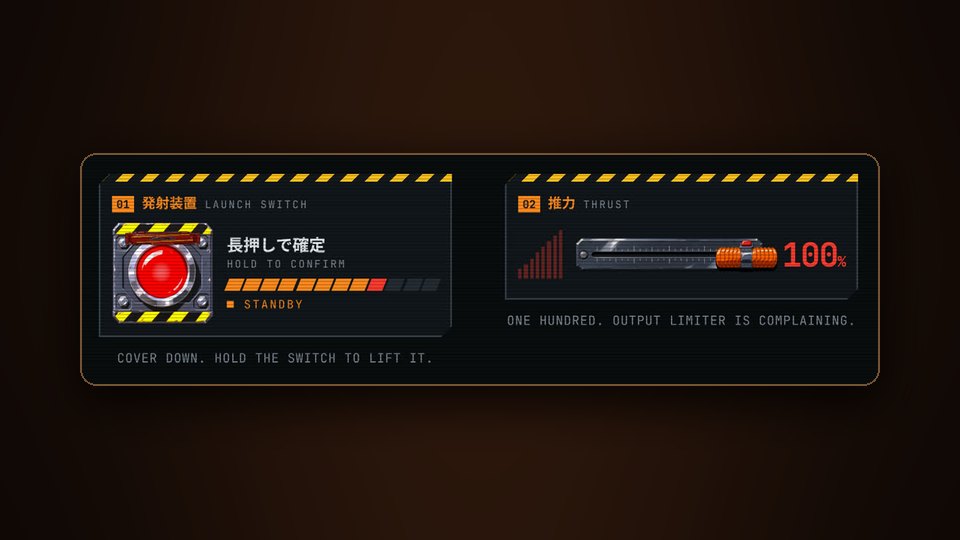
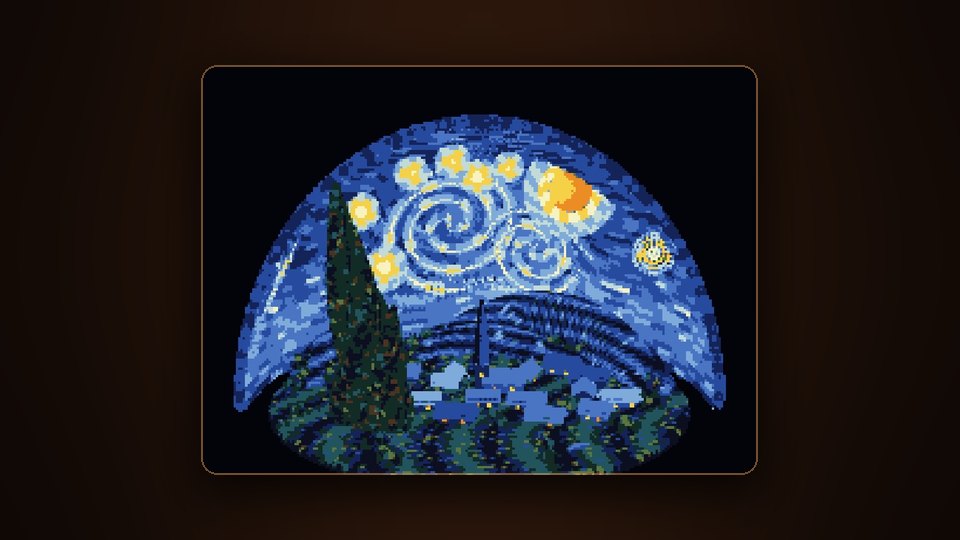
Dot Bloom is a folder of experiments in drawing controls out of dots. It began as one dot-field renderer fed with real footage: each clip is stored as 48 tiny frames, so a single number from 0 to 1 scrubs it, and a switch can be a rose opening. It is a local experiment, not a published library.
What is in it
- Holographic flowers and jellyfish. Every dot starts inside the control and flies out to its place. The control is where the image is stored, and using it projects the flower.
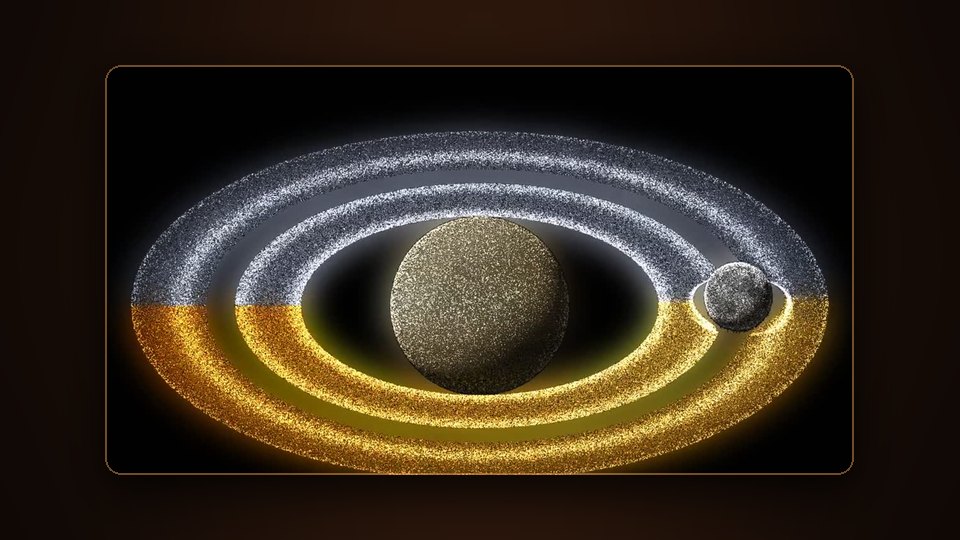
- Moondust. Controls made of fine dust. Every grain has a place to be and a spring holding it there, and the Moon rolls through them. There are three sets of five controls, a lab of four experiments and an equalizer.
- An agent console. The planet is the agent, its moons are its sub-agents, and a moon's phase is how far its task has got. It is scripted: no model is called.
- Eight slow loops that each keep to one 11 second breath, so they stay in step.
How it is built
Plain HTML and JavaScript drawing to a 2D canvas. The lab is where it gets least like a control. One dial has no springs at all: the dust is in orbit, faster near the planet, and the handle is a moon riding in a gap in the ring. The pointer has gravity too.
Credits
The real footage is time-lapse video from Wikimedia Commons under Creative Commons licences and Moon visualisations from NASA. The planet surfaces are from Solar System Scope, CC BY 4.0. Some of the flower and jellyfish clips were generated for the project.
- Canvas 2D
- Vanilla JS
- Particle springs
- Ordered dithering
- Web Audio