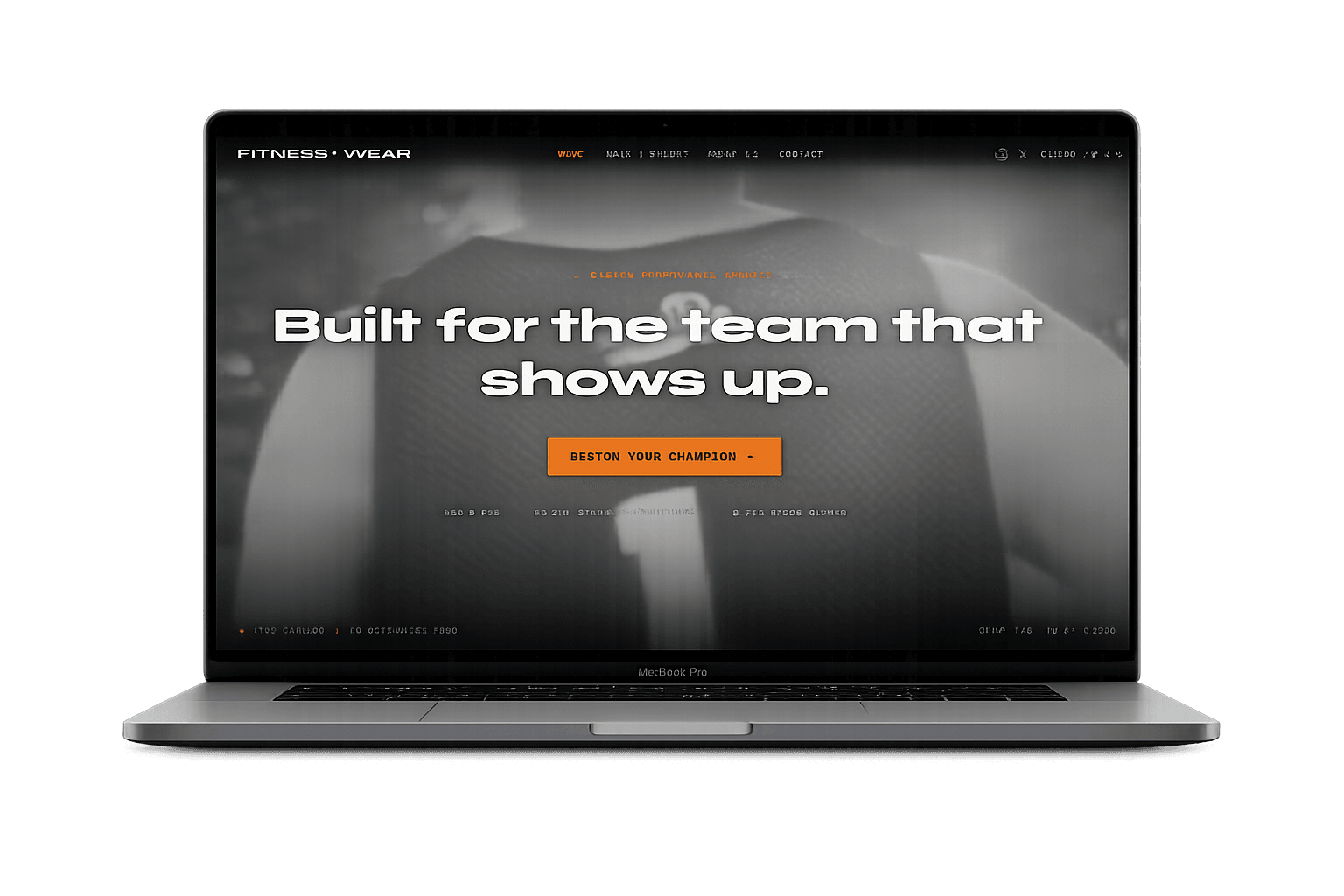
Designing for three audiences in a custom screen-printing business.
A digital design system serving customers, a sales team, and a print team. I built it and ran it for eleven years.
FOUNDER + DESIGNER
2011-2022
WEB + INTERNAL TOOLS
CUSTOM PRINT INDUSTRY
This was the project that taught me how to design for multiple audiences inside a single system. Eleven years of running it taught me everything else.
01
The problem
Fitness Wear started in 2011 as a phone-and-email business. Through the 2010s we picked up recurring customers like Toby Kavukattu. He came back every August to print shirts for a flag football tournament. Every order he placed lived in a Gmail thread. Quote requests, revisions, artwork, sizes, all of it.
That worked. It also had a ceiling. The workflow that felt personal in 2016 was, by 2021, the reason a customer with a five-year history still had to re-explain his order from scratch, and the reason a single missed reply could derail a press date. Three different people felt that ceiling in three different ways.
Money was being left on the table.
MEANWHILE, ON THE OUTSIDE
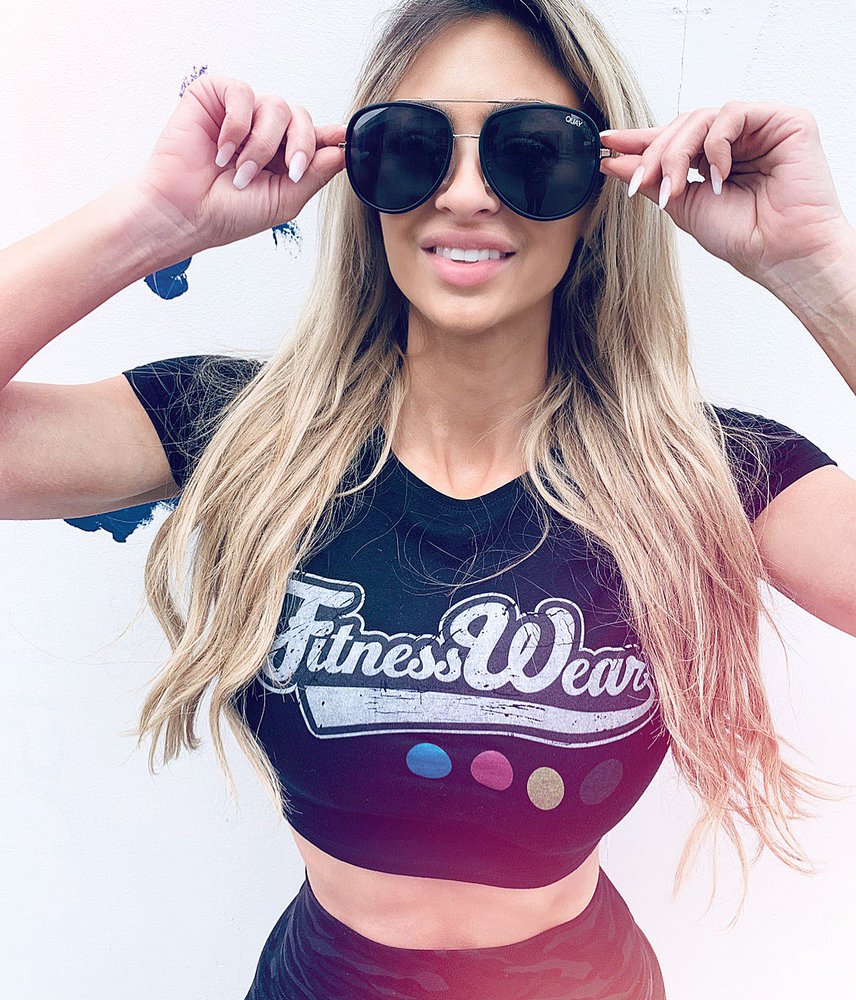
Customers wore, opened, branded, lived in the work, even as every order moved through Gmail.
Specs negotiated in prose.
The customer wrote everything out in plain text: quantities, sizes, ink colors, deadlines, budget. Revisions came days later in follow-up emails. They were guessing at specs because we had nothing to show them until production was almost underway. Five years later, the same customer was still writing the same kind of email.
“Hi Fitness Wear, Looking to get a bunch of shirts printed for a flag football tournament on August 13th… / Sorry, slight revision to the Berry order: Medium-3, Large-7, XL-5”
“Men's Dri-fit shirts. One-color (probably Teal, but flexible). White ink on front and back. 130 shirts total. Need it by Saturday, August 14th. Budget is around $1,500 with tax.”
Three audiences. One system. The rest of this is how I designed for all three.
02
Three users, three different jobs
Before I designed a single screen, I had to be honest with myself about who was using this system and what each of them needed. The three audiences pulled in different directions. The interesting design work was in resolving those tensions, not pretending they didn't exist.
CUSTOMER
Often non-designers, often in a hurry
Most of our customers were school administrators, restaurant owners, event coordinators. They weren't designers. They had a logo, a deadline, and a budget. They needed to specify a job, see a price, and place an order with confidence, without having to call me to ask what something meant.
SALES TEAM
Needed control without bottleneck
My sales team needed to triage incoming orders. The simple ones should flow through automatically. The complex ones (custom artwork, large quotes, special clients) needed human attention. The system had to let them step in where they were needed without requiring them to touch every order.
PRINT TEAM
Needed precision, not ambiguity
The print team operated machines. A misunderstood order meant a ruined run of shirts and a real cost to the business. The handoff from customer language ("I want it big") to print specifications (inches, ink colors, placement coordinates) had to be unambiguous.
Each audience had constraints that pulled against the others. The design lived in the negotiations.
03
The customer journey
The customer-facing storefront was the front door of the business. It had to do two contradictory things at once: feel simple enough for a first-time customer to use without help, and capture enough specific information that the order didn't need follow-up calls. Every field I added was a step away from simplicity. Every field I removed was a potential ambiguity downstream.
INSIDE THE CUSTOMER FLOW · HOMEPAGE → CHAMP·LAB
CLICK A STEP TO PREVIEW THAT SCREEN
PROOF APPROVAL · LOCKING THE SPEC BEFORE PRESS
CLICK A STATE TO PREVIEW
The artwork upload decision
One of the harder decisions was whether to let customers upload their own artwork. From a business perspective it was a marketing advantage. Schools wanted their existing logos. Restaurants wanted their brand assets. From a print-team perspective it was risk. Customer files often arrived in formats we couldn't print, at resolutions too low to look right, or with colors that didn't separate cleanly for screen printing.
I designed the upload flow as an explicit contract with the customer. The form told them what file formats and resolutions would work. The preview showed them exactly what would print, at the size it would print, on the color of shirt they'd chosen. A confirmation step asked them to verify what they were seeing. If anything was off (wrong proportions, low resolution, color issues), the customer caught it at upload time, not after the shirts were printed.
The trade-off was honest: more friction at upload, fewer errors at print. The design choice favored downstream certainty over upstream ease, because the cost of a wrong order fell on the business, not the customer.
ARTWORK UPLOADED
fitnesswear_distressed_cmyk.png
Front print · 9" × 11" · 4 inks
[ logo preview ]
✓
PNG · transparent OK
800 × 500 px · 300 DPI
✓
4-color separation detected
Cyan · Magenta · Yellow · Black
✓
Print-ready resolution
Scales clean at 9" × 11"
Preview on garment →
TWO-STEP CHECKOUT FLOW
FITNESSWEAR · 2014-2022
STEP 01
Specifications
Garment
Bella+Canvas 3001
Quantity
130 pieces
Front print
9″ × 11″ · 2 inks
Back print
10″ × 13″ · 1 ink
Decoration
Screen print
Continue →
→
commits
STEP 02
Review & checkout
Garment + decoration
$1,066.00
Setup × 3 screens
$105.00
2XL upcharge × 4
$8.00
Tax (10.25%)
$138.17
Total
$1,486.17
Place order →
Price depends on what’s specified. Splitting the flow forces a moment of verification before any financial commitment.
DESIGN DECISION
I chose a two-step checkout over a single page even though single-page was the trend in 2014. We had high-touch orders. Bulk merchandise for schools. Custom embroidery for healthcare. Customers needed to commit to specifications before seeing the final price, because the price depended on what they'd specified. Splitting the flow gave them a clear moment to verify their order before financial commitment. That mattered more for large orders than checkout speed did.
04
The sales tool
Behind the storefront sat the internal tool my sales team used to run the business. Every order created through the storefront landed here. Quote requests that didn't make it to checkout, repeat customer profiles, multi-variable pricing builders for the complex jobs — this is where the work actually got done. The goal was to make the simple orders disappear into automation and put human attention on the orders that needed it.
SALES BACKEND · ORDER DETAIL · QUOTE BUILDER
FITNESSWEAR INTERNAL · 2014-2022
All orders
- FW-4827Toby KavukattuMFL Summer TournamentPROOF SENT130Aug 14$1,486.17
- FW-4826Mercy Health HROnboarding kits Q3IN PRODUCTION264Aug 09$3,712.40
- FW-4825Maple St. DinerServer tees · summer runQUEUED36Aug 16$418.00
- FW-4824Lincoln ElementaryField-day spirit shirtsSHIPPED412Jul 31$4,890.00
- FW-4823Northside BrewingCrew apparel re-upSHIPPED48Jul 28$612.00
05
The print team workflow
By the time an order reached the press, the spec was locked. The press queue showed every job for the day, sorted by ship date, with the approved proof, garment, ink colors, and placement coordinates all on a single screen. The press-ready spec sheet was the single source of truth — designed to be unambiguous because a misread number meant a ruined run.
PRESS QUEUE · TODAY'S RUN SHEET · SPEC SOURCE OF TRUTH
PRINT FLOOR INTERFACE
- FW-4827MFL Summer Tournament · Toby Kavukattu
- FW-4826Mercy Health HR · Onboarding kits Q3
- FW-4825Maple St. Diner · Server tees
- ✓First-print sample pulled, registered against approved proof
- ✓Ink coverage uniform across 5 random pulls (no fish-eyes, no patchiness)
- ✓Registration aligned. No ghosting or color shift on top layer
- Garment defects checked. Rejects to side bin, count logged
- Cure verified: stretch test on 1 shirt per dozen
- Final count matches pull list before fold/pack
06
What it produced, and what I'd do differently
The system ran for the rest of the company's life. Some outcomes I can measure, some I can only describe. I'll be honest about which is which.
8,400
ORDERS PROCESSED THROUGH THE SYSTEM
15 hours
SALES-TEAM HOURS RECOVERED PER WEEK
+75%
REPEAT-CUSTOMER RATE
Beyond the numbers, my sales team went from working evenings catching up on order entry to leaving on time. My print team's reprint rate dropped meaningfully. I don't have an exact figure, but it was the difference between a steady operational problem and a rare event. Customers ordered more often once they could place an order in five minutes instead of forty-five.
The system I built outlasted my involvement with it by several years and supported the business through the COVID period when in-person event work disappeared and we had to pivot to remote-merchandising for clients we couldn't see in person.
What I’d do differently
Two things stand out, looking back.
First, I underinvested in the print-team side at the start. The customer storefront was where the business case lived. More orders in, more revenue. The internal tooling felt secondary. The print team's feedback in the first months of operation taught me that the internal users were as load-bearing as the external ones. If I built the system again today, I'd design all three audiences in parallel from the start, not customer-first with internal as a follow-up.
Second, I'd build measurement into the system as core infrastructure. I had business metrics like order volume, revenue, and repeat rate. I didn't have journey metrics. I couldn't tell you precisely where customers got stuck in the configurator or which orders the sales team spent the most time on. I improved the system based on what I saw and what my team told me, not based on what the data showed. That was a real gap, and it's one of the first instincts I'd bring to any new product work today.
This was the project that taught me what product design actually feels like across an entire system. Designing for multiple audiences. Persuading collaborators when our perspectives differed. Shipping under real constraints. Operating the result for eleven years and living with the consequences.
FITNESS WEAR INC. · 2011-2022 · CHICAGO, IL
JF:~$
JF:~$
Fitness Wear Inc.
Workflow System · Custom Apparel Studio